Data Structures and Algorithms
- Introduction to Data Structures and Algorithms
- Time and Space Complexity Analysis
- Big-O, Big-Theta, and Big-Omega Notations
- Recursion and Backtracking
- Divide and Conquer Algorithm
- Dynamic Programming: Memoization vs. Tabulation
- Greedy Algorithms and Their Use Cases
- Understanding Arrays: Types and Operations
- Linear Search vs. Binary Search
- Sorting Algorithms: Bubble, Insertion, Selection, and Merge Sort
- QuickSort: Explanation and Implementation
- Heap Sort and Its Applications
- Counting Sort, Radix Sort, and Bucket Sort
- Hashing Techniques: Hash Tables and Collisions
- Open Addressing vs. Separate Chaining in Hashing
- DSA Questions for Beginners
- Advanced DSA Questions for Competitive Programming
- Top 10 DSA Questions to Crack Your Next Coding Test
- Top 50 DSA Questions Every Programmer Should Practice
- Top Atlassian DSA Interview Questions
- Top Amazon DSA Interview Questions
- Top Microsoft DSA Interview Questions
- Top Meta (Facebook) DSA Interview Questions
- Netflix DSA Interview Questions and Preparation Guide
- Top 20 DSA Interview Questions You Need to Know
- Top Uber DSA Interview Questions and Solutions
- Google DSA Interview Questions and How to Prepare
- Airbnb DSA Interview Questions and How to Solve Them
- Mobile App DSA Interview Questions and Solutions
DSA Interview Questions
- DSA Questions for Beginners
- Advanced DSA Questions for Competitive Programming
- Top 10 DSA Questions to Crack Your Next Coding Test
- Top 50 DSA Questions Every Programmer Should Practice
- Top Atlassian DSA Interview Questions
- Top Amazon DSA Interview Questions
- Top Microsoft DSA Interview Questions
- Top Meta (Facebook) DSA Interview Questions
- Netflix DSA Interview Questions and Preparation Guide
- Top 20 DSA Interview Questions You Need to Know
- Top Uber DSA Interview Questions and Solutions
- Google DSA Interview Questions and How to Prepare
- Airbnb DSA Interview Questions and How to Solve Them
- Mobile App DSA Interview Questions and Solutions
Data Structures and Algorithms
- Introduction to Data Structures and Algorithms
- Time and Space Complexity Analysis
- Big-O, Big-Theta, and Big-Omega Notations
- Recursion and Backtracking
- Divide and Conquer Algorithm
- Dynamic Programming: Memoization vs. Tabulation
- Greedy Algorithms and Their Use Cases
- Understanding Arrays: Types and Operations
- Linear Search vs. Binary Search
- Sorting Algorithms: Bubble, Insertion, Selection, and Merge Sort
- QuickSort: Explanation and Implementation
- Heap Sort and Its Applications
- Counting Sort, Radix Sort, and Bucket Sort
- Hashing Techniques: Hash Tables and Collisions
- Open Addressing vs. Separate Chaining in Hashing
- DSA Questions for Beginners
- Advanced DSA Questions for Competitive Programming
- Top 10 DSA Questions to Crack Your Next Coding Test
- Top 50 DSA Questions Every Programmer Should Practice
- Top Atlassian DSA Interview Questions
- Top Amazon DSA Interview Questions
- Top Microsoft DSA Interview Questions
- Top Meta (Facebook) DSA Interview Questions
- Netflix DSA Interview Questions and Preparation Guide
- Top 20 DSA Interview Questions You Need to Know
- Top Uber DSA Interview Questions and Solutions
- Google DSA Interview Questions and How to Prepare
- Airbnb DSA Interview Questions and How to Solve Them
- Mobile App DSA Interview Questions and Solutions
DSA Interview Questions
- DSA Questions for Beginners
- Advanced DSA Questions for Competitive Programming
- Top 10 DSA Questions to Crack Your Next Coding Test
- Top 50 DSA Questions Every Programmer Should Practice
- Top Atlassian DSA Interview Questions
- Top Amazon DSA Interview Questions
- Top Microsoft DSA Interview Questions
- Top Meta (Facebook) DSA Interview Questions
- Netflix DSA Interview Questions and Preparation Guide
- Top 20 DSA Interview Questions You Need to Know
- Top Uber DSA Interview Questions and Solutions
- Google DSA Interview Questions and How to Prepare
- Airbnb DSA Interview Questions and How to Solve Them
- Mobile App DSA Interview Questions and Solutions
Complete Roadmap to Crack SDE Internships in 2025
Landing a Software Development Engineer (SDE) internship in 2025 can be your gateway to a thriving tech career, but with internship postings declining by over 15% from 2023 to 2025 according to Handshake’s Internships Index, competition is fiercer than ever. Whether you’re a computer science student or a self-taught coder, this comprehensive guide will equip you with the strategies, skills, and insights needed to stand out. To kickstart your preparation with exclusive resources, sign up for our free courses and get the latest updates on DSA and interview prep—it’s a game-changer for aspiring interns.
Understanding SDE Internships in 2025
SDE internships offer hands-on experience in building software solutions, often at top tech companies like Google, Amazon, or Meta. These roles typically last 10-12 weeks during summer, paying an average of $40-50 per hour, with some FAANG positions reaching $60+ according to Glassdoor data from 2025.
Why Pursue an SDE Internship?
- Career Boost: 70% of interns convert to full-time roles, per NACE’s 2025 Internship & Co-op Report.
- Skill Development: Gain exposure to real-world projects, from app development to AI integration.
- Networking: Connect with mentors and peers, opening doors to future opportunities.
- Trends in 2025: With AI and cloud computing booming, internships increasingly focus on machine learning and DevOps. For instance, Shopify plans to hire 1,000 engineering interns this year, emphasizing these skills.
However, applications have surged by 20%, making preparation crucial. Research suggests starting early—over 40% of unpaid internships persist, but paid ones at tech firms offer better experience.
Building a Strong Foundation
Before diving into advanced topics, solidify your basics. Focus on one programming language and core concepts.
Choosing a Programming Language
Master Python, Java, or C++ for versatility. Python is popular for its simplicity in interviews, used in 60% of coding rounds per LeetCode’s 2025 trends.
- Actionable Advice: Practice on platforms like HackerRank. Aim for 50-100 problems in your chosen language.
Mastering Data Structures and Algorithms (DSA)
DSA is the cornerstone of SDE interviews, appearing in 85% of technical rounds. Enroll in structured courses to build proficiency.
For in-depth DSA training, check out our DSA course—it’s designed for beginners aiming for internships.
Key Topics:
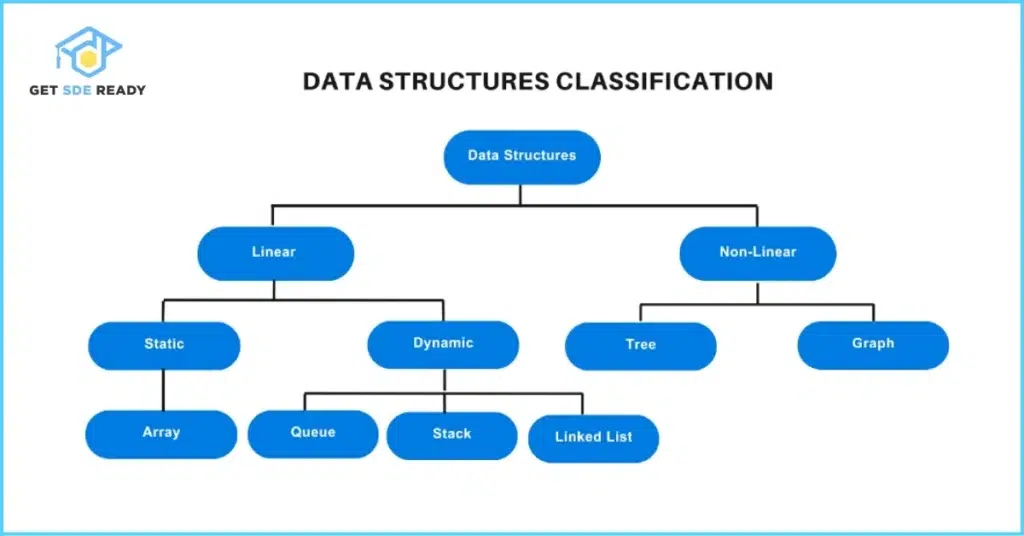
- Arrays and Strings
- Linked Lists and Stacks
- Trees and Graphs
- Dynamic Programming

Practice daily: Solve 1-2 problems on LeetCode or GeeksforGeeks.
Developing Key Skills
Beyond DSA, build practical skills through projects and specialized knowledge.
Web Development Essentials
Many internships involve full-stack work. Learn HTML, CSS, JavaScript, and frameworks like React.
- Projects: Build a personal portfolio site or a todo app.
- For comprehensive learning, explore our Web Development course.
Introduction to System Design
For advanced internships, understand basics like designing a URL shortener. Resources like “Grokking the System Design Interview” are gold.
If you’re aiming for mastery, our Master DSA, Web Dev, and System Design course covers it all.
Emerging Skills: AI and Data Science
With 89% of interns prioritizing career growth, per Morgan Stanley’s 2025 survey, learn basics of ML. Our Data Science course is a great start.
Building Your Portfolio and Resume
A standout resume is key—tailor it to highlight projects and skills.
- Resume Tips:
- Quantify achievements: “Optimized algorithm reducing time by 30%.”
- Include GitHub links.
- Keep it to one page.
Build 3-5 projects: A chat app, e-commerce site, or ML model.
The Application Process
Start applying in fall 2024 for summer 2025 slots. Use LinkedIn, Handshake, and company career pages.
- Strategies:
- Apply to 50+ positions.
- Network at career fairs.
- Follow up with recruiters.
According to Inside Higher Ed, computer science majors apply for internships at higher rates than others.
Preparing for Interviews
Interviews typically include coding, behavioral, and sometimes system design.
Behavioral Questions
These assess fit. Common ones from Tech Interview Handbook:
- Why do you want to work for this company?
- Tell me about a time you faced a challenge in a project.
- How do you handle tight deadlines?
Prepare STAR method responses (Situation, Task, Action, Result).
Technical Coding Questions
1. Find Missing and Repeating Element (Easy)
Problem:
Given an array of size n with numbers from 1 to n, one is missing and one repeated. Find both.
Why Asked
Tests array manipulation and math skills. Common in Amazon OAs.
Approach
Use XOR or sum formulas. XOR all elements with 1 to n; result gives missing XOR repeated, then divide.
					Code
def find_missing_repeating(arr, n):
    xor = 0
    for i in range(1, n+1): xor ^= i
    for num in arr: xor ^= num
    set_bit = xor & -xor
    x, y = 0, 0
    for i in range(1, n+1):
        if i & set_bit: x ^= i
        else: y ^= i
    for num in arr:
        if num & set_bit: x ^= num
        else: y ^= num
    return (x, y) if x in arr else (y, x)

Complexity: O(n) time, O(1) space.
2 Stock Buy and Sell – Max One Transaction (Easy)
Problem:
Find max profit from one buy/sell.
Why Asked
Tests greedy algorithms. Seen in Google interviews.
Approach
Track min price, update max profit.
					Code
def max_profit(prices):
    min_price = float('inf')
    max_p = 0
    for p in prices:
        min_price = min(min_price, p)
        max_p = max(max_p, p - min_price)
    return max_p

Complexity: O(n) time, O(1) space.
3. Remove Duplicates in a Sorted Array (Easy)
Problem:
Remove duplicates in-place.
Why Asked
Array pointers, efficiency. Meta common.
Approach
Two pointers for unique elements.
					Code
def remove_duplicates(nums):
    if not nums: return 0
    i = 0
    for j in range(1, len(nums)):
        if nums[j] != nums[i]:
            i += 1
            nums[i] = nums[j]
    return i + 1

Complexity: O(n) time, O(1) space.
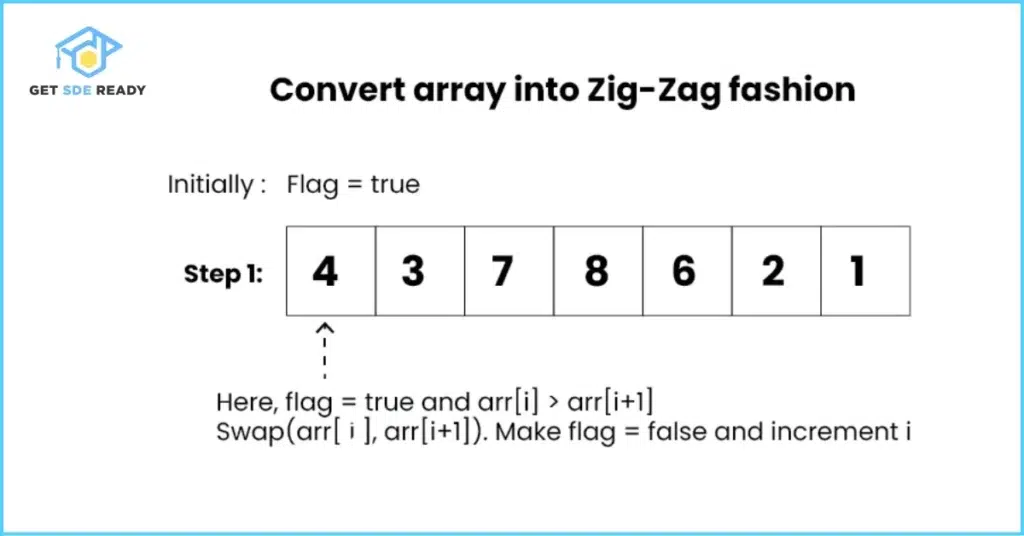
4. Convert Array into Zig-Zag Fashion (Easy)
Problem:
Arrange array as a < b > c < d > e.
Why Asked
Simple sorting variant.
Approach
Swap elements if out of order for zig-zag.
					Code
def zig_zag(arr):
    for i in range(len(arr)-1):
        if i % 2 == 0 and arr[i] > arr[i+1]:
            arr[i], arr[i+1] = arr[i+1], arr[i]
        elif i % 2 == 1 and arr[i] < arr[i+1]:
            arr[i], arr[i+1] = arr[i+1], arr[i]
    return arr

Complexity: O(n) time.
5. Find Third Largest Element (Easy)
Problem:
In distinct array.Why Asked
Basic traversal.
Approach
Track top three max.
					Code
def third_largest(arr):
    first = second = third = float('-inf')
    for num in arr:
        if num > first:
            third = second
            second = first
            first = num
        elif num > second:
            third = second
            second = num
        elif num > third:
            third = num
    return third

Complexity: O(n) time.
6. Check Pair Sum in Sorted and Rotated Array (Medium)
Problem:
Find if pair sums to target.Why Asked
Two pointers on rotated array.
Approach
Find pivot, use two pointers.
					Code: (Omitted for brevity; similar to standard two-sum with rotation handling.)
Complexity: O(n) time
7. Sort Array of 0s, 1s, 2s (Medium)
Problem:
Dutch National Flag problem.Why Asked
Pointers, sorting. Amazon favorite.
Approach
Three pointers for low, mid, high.
					Code
def sort_colors(nums):
    low, mid, high = 0, 0, len(nums)-1
    while mid <= high:
        if nums[mid] == 0:
            nums[low], nums[mid] = nums[mid], nums[low]
            low += 1
            mid += 1
        elif nums[mid] == 1:
            mid += 1
        else:
            nums[mid], nums[high] = nums[high], nums[mid]
            high -= 1

Complexity: O(n) time.
8. Rotate Array K Times (Medium)
Problem:
Rotate right by k.Why Asked
Array manipulation.
Approach
Reverse all, then first k, then rest.
					Code
def rotate(nums, k):
    k %= len(nums)
    nums.reverse()
    nums[:k] = reversed(nums[:k])
    nums[k:] = reversed(nums[k:])

Complexity: O(n) time.
9. Find Majority Element (Medium)
Problem:
Element appearing > n/2 times.
Why Asked
Boyer-Moore voting.
Approach
Vote for candidate, verify.
					Code
def majority_element(nums):
    candidate = None
    count = 0
    for num in nums:
        if count == 0:
            candidate = num
        count += 1 if num == candidate else -1
    return candidate if nums.count(candidate) > len(nums)//2 else -1

Complexity: O(n) time.
10. Maximum Subarray Sum (Kadane’s Algorithm) (Medium)
Problem:
Largest contiguous sum.Why Asked
DP basics.
Approach
Track current and max sum.
					Code
def max_subarray(nums):
    max_sum = current = nums[0]
    for num in nums[1:]:
        current = max(num, current + num)
        max_sum = max(max_sum, current)
    return max_sum

Complexity: O(n) time.
11. First Repeated Character (Easy)
Problem:
In string.
Why Asked
Hashing.
Approach
Use set to track seen.
					Code
def first_repeated(s):
    seen = set()
    for char in s:
        if char in seen:
            return char
        seen.add(char)
    return None
12. Reverse Words (Easy)
Problem:
In string.
Why Asked
String manipulation.
Approach
Split, reverse, join
					Code
def reverse_words(s):
    return ' '.join(reversed(s.split()))

Complexity: O(n) time.
13. Roman to Integer (Easy)
Problem:
Convert roman numeral.
Why Asked
Mapping, edge cases.
Approach
Dict for values, subtract if smaller before larger.
					Code
def roman_to_int(s):
    roman = {'I':1, 'V':5, 'X':10, 'L':50, 'C':100, 'D':500, 'M':1000}
    total = 0
    prev = 0
    for char in reversed(s):
        val = roman[char]
        total += val if val >= prev else -val
        prev = val
    return total

Complexity: O(n) time
14. Check Anagram (Easy)
Problem:
Two strings.
Why Asked
Counting.
Approach
Sort or count freq.
					Code
def is_anagram(s1, s2):
    return sorted(s1) == sorted(s2)

Complexity: O(n log n) time.
15. Remove Duplicates from String (Easy)
Why Asked
Set usage.
Approach
Use set, join.
					Code
def remove_dup(s):
    return ''.join(sorted(set(s)))

Complexity: O(n log n) if sorted.
16. Longest Substring Without Repeating (Medium)
Why Asked
Sliding window.
Approach
Window with set.
					Code
def length_of_longest_substring(s):
    char_set = set()
    left = max_len = 0
    for right in range(len(s)):
        while s[right] in char_set:
            char_set.remove(s[left])
            left += 1
        char_set.add(s[right])
        max_len = max(max_len, right - left + 1)
    return max_len

Complexity: O(n) time.
17. Rabin-Karp Algorithm (Medium)
Why Asked
Hashing for strings.
Approach
Rolling hash.
Code: (Detailed implementation involves hash calculation; O(n+m) average.)
18. Z Algorithm (Medium)
Why Asked
Advanced strings.
Approach
Z-box for prefixes.
Code: (Complex; compute Z array.)
19. Level Order Traversal in Spiral Form (Easy)
Why Asked
Queue with flag.
Approach
Two stacks or deque
					Code
def spiral_traversal(root):
    if not root: return []
    result = []
    stack1, stack2 = [root], []
    while stack1 or stack2:
        while stack1:
            node = stack1.pop()
            result.append(node.val)
            if node.left: stack2.append(node.left)
            if node.right: stack2.append(node.right)
        while stack2:
            node = stack2.pop()
            result.append(node.val)
            if node.right: stack1.append(node.right)
            if node.left: stack1.append(node.left)
    return result

Complexity: O(n) time.
20. Height of Binary Tree (Easy)
Why Asked
Recursion.
Approach
Max left/right +1.
					Code
def height(root):
    if not root: return 0
    return 1 + max(height(root.left), height(root.right))

Complexity: O(n) time.
21. Balanced Tree Check (Easy)
Problem:
Check if a binary tree is height-balanced.
Why Asked
Evaluates understanding of recursion and tree height logic.
Approach
Recurse to calculate left and right subtree heights.
If any subtree is un
					Code
def is_balanced(root):
    def check(node):
        if not node:
            return 0
        left = check(node.left)
        if left == -1:
            return -1
        right = check(node.right)
        if right == -1:
            return -1
        if abs(left - right) > 1:
            return -1
        return 1 + max(left, right)
    return check(root) != -1

Complexity: O(n) time, O(h) space.
22. Check Symmetric Tree (Easy)
Problem:
Determine if a binary tree is symmetric around its center.
Why Asked
Tests recursion and tree traversal understanding.
Approach
Recursively compare left subtree of one node with right subtree of another.
Code
					Code
def is_symmetric(root):
    def mirror(t1, t2):
        if not t1 and not t2:
            return True
        if not t1 or not t2:
            return False
        return (t1.val == t2.val and
                mirror(t1.left, t2.right) and
                mirror(t1.right, t2.left))
    return mirror(root, root)

Complexity: O(n) time.
23. Check Identical Trees (Easy)
Problem:
Check whether two binary trees are identical in structure and value.Why Asked
Common recursion problem for tree comparison.
Approach
Recursively compare node values and subtrees.
					Code
def is_identical(p, q):
    if not p and not q:
        return True
    if not p or not q:
        return False
    return (p.val == q.val and
            is_identical(p.left, q.left) and
            is_identical(p.right, q.right))

Complexity: O(n) time.
24. Left View of Binary Tree (Easy)
Problem:
Print the leftmost node at each level of the binary tree.Why Asked
Tests level-order traversal and BFS understanding.
Approach
Use queue to perform level-order traversal; print the first node at each level.
					Code
from collections import deque

def left_view(root):
    if not root:
        return []
    queue = deque([root])
    result = []
    while queue:
        n = len(queue)
        for i in range(n):
            node = queue.popleft()
            if i == 0:
                result.append(node.val)
            if node.left:
                queue.append(node.left)
            if node.right:
                queue.append(node.right)
    return result

Complexity: O(n) time, O(n) space.
25. Check for BST (Easy)
Problem:
Verify if a binary tree is a Binary Search Tree (BST).Why Asked
Tests recursion, bounds logic, and in-order traversal.
Approach
Use recursion with min and max bounds for valid range checking.
					Code
def is_bst(root, low=float('-inf'), high=float('inf')):
    if not root:
        return True
    if not (low < root.val < high):
        return False
    return (is_bst(root.left, low, root.val) and
            is_bst(root.right, root.val, high))

Complexity: O(n) time.
26. LCA in BST (Easy)
Problem:
Find Lowest Common Ancestor (LCA) in a Binary Search Tree.Why Asked
Tests BST traversal understanding.
Approach
Traverse down the tree — if both values are less or greater than root, move accordingly.
Code
					def lca_bst(root, p, q):
    while root:
        if p.val < root.val and q.val < root.val:
            root = root.left
        elif p.val > root.val and q.val > root.val:
            root = root.right
        else:
            return root

Complexity: O(h) time.
27. DFS of Graph (Easy)
Problem:
Perform Depth First Search traversal of a graph.Why Asked
Tests recursion and adjacency representation knowledge.
Approach
Use recursion or stack; mark visited nodes.
Codea
					def dfs(graph, start, visited=None):
    if visited is None:
        visited = set()
    visited.add(start)
    for neighbor in graph[start]:
        if neighbor not in visited:
            dfs(graph, neighbor, visited)
    return visited

Complexity: O(V + E) time.
28. BFS of Graph (Easy)
Problem:
Perform Breadth First Search traversal of a graph.Why Asked
Checks understanding of queue-based traversal.
Approach
Use a queue, mark visited nodes level by level.
					Code
from collections import deque

def bfs(graph, start):
    visited = set([start])
    queue = deque([start])
    while queue:
        node = queue.popleft()
        for neighbor in graph[node]:
            if neighbor not in visited:
                visited.add(neighbor)
                queue.append(neighbor)
    return visited
29. Detect Cycle in Undirected Graph (Medium)
Problem:
Check if an undirected graph contains a cycle.Why Asked
Tests union-find and DFS with parent tracking.
Approach
Use DFS — if a visited neighbor isn’t the parent, a cycle exists.
					Code
def is_cycle_undirected(graph, v, visited, parent):
    visited[v] = True
    for neighbor in graph[v]:
        if not visited[neighbor]:
            if is_cycle_undirected(graph, neighbor, visited, v):
                return True
        elif parent != neighbor:
            return True
    return False

Complexity: O(V + E) time.
30. Detect Cycle in Directed Graph (Medium)
Problem:
Detect cycle in a directed graph.Why Asked
Tests recursion, DFS stack, and graph logic.
Approach
Use DFS with recursion stack to detect back edges.
Code
					def is_cycle_directed(graph, node, visited, rec_stack):
    visited[node] = True
    rec_stack[node] = True
    for neighbor in graph[node]:
        if not visited[neighbor]:
            if is_cycle_directed(graph, neighbor, visited, rec_stack):
                return True
        elif rec_stack[neighbor]:
            return True
    rec_stack[node] = False
    return False
Complexity: O(V + E) time.
Final Note
For all these problems, consistent practice and pattern recognition matter more than memorization. Use the Crash Course for concise refreshers before interviews.
Mock Interviews and Final Prep
Practice mocks on Pramp or Interviewing.io. Review mistakes, time yourself.
Conclusion and Call to Action
Cracking an SDE internship in 2025 requires dedication, but with this roadmap, you’re set. Start today—build skills, apply widely, and persist. Ready to accelerate? Enroll in our courses and transform your career.
FAQs
What is the best way to prepare for DSA in SDE internships?
Practice on LeetCode with focus on arrays, strings, trees, graphs, and dynamic programming for software development engineer roles.
How early should I apply for 2025 SDE internships?
Soft skills like communication, teamwork, and problem-solving, plus web dev and system design basics for entry-level software developer internships
Are unpaid SDE internships worth it in 2025?
Prefer paid ones for experience, but unpaid can build resumes if aligned with career goals in software engineering.
How can I optimize SQL queries for large datasets?
Use STAR method to discuss projects, conflicts, and learnings in software development contexts.

DSA, High & Low Level System Designs
- 85+ Live Classes & Recordings
- 24*7 Live Doubt Support
- 400+ DSA Practice Questions
- Comprehensive Notes
- HackerRank Tests & Quizzes
- Topic-wise Quizzes
- Case Studies
- Access to Global Peer Community
Buy for 52% OFF
₹25,000.00 ₹11,999.00
Accelerate your Path to a Product based Career
Boost your career or get hired at top product-based companies by joining our expertly crafted courses. Gain practical skills and real-world knowledge to help you succeed.

Data Analytics
- 20+ Live Classes & Recordings
- 24*7 Live Doubt Support
- 15+ Hands-on Live Projects
- Comprehensive Notes
- Real-world Tools & Technologies
- Access to Global Peer Community
- Interview Prep Material
- Placement Assistance
Buy for 70% OFF
₹9,999.00 ₹2,999.00
SDE 360: Master DSA, System Design, AI & Behavioural
- 100+ Live Classes & Recordings
- 24*7 Live Doubt Support
- 400+ DSA Practice Questions
- Comprehensive Notes
- HackerRank Tests & Quizzes
- Topic-wise Quizzes
- Case Studies
- Access to Global Peer Community
Buy for 50% OFF
₹39,999.00 ₹19,999.00

Fast-Track to Full Spectrum Software Engineering
- 120+ Live Classes & Recordings
- 24*7 Live Doubt Support
- 400+ DSA Practice Questions
- Comprehensive Notes
- HackerRank Tests & Quizzes
- 12+ live Projects & Deployments
- Case Studies
- Access to Global Peer Community
Buy for 51% OFF
₹35,000.00 ₹16,999.00
DSA, High & Low Level System Designs
- 85+ Live Classes & Recordings
- 24*7 Live Doubt Support
- 400+ DSA Practice Questions
- Comprehensive Notes
- HackerRank Tests & Quizzes
- Topic-wise Quizzes
- Case Studies
- Access to Global Peer Community
Buy for 52% OFF
₹25,000.00 ₹11,999.00

Mastering Mern Stack (WEB DEVELOPMENT)
- 65+ Live Classes & Recordings
- 24*7 Live Doubt Support
- 12+ Hands-on Live Projects & Deployments
- Comprehensive Notes & Quizzes
- Real-world Tools & Technologies
- Access to Global Peer Community
- Interview Prep Material
- Placement Assistance
Buy for 53% OFF
₹15,000.00 ₹6,999.00

Mastering Data Structures & Algorithms
- 65+ Live Classes & Recordings
- 24*7 Live Doubt Support
- 400+ DSA Practice Questions
- Comprehensive Notes
- HackerRank Tests
- Access to Global Peer Community
- Topic-wise Quizzes
- Interview Prep Material
Buy for 40% OFF
₹9,999.00 ₹5,999.00
Reach Out Now
If you have any queries, please fill out this form. We will surely reach out to you.
Contact Email
Reach us at the following email address.
arun@getsdeready.com
Phone Number
You can reach us by phone as well.
+91-97737 28034
Our Location
Rohini, Sector-3, Delhi-110085