Data Structures and Algorithms
- Introduction to Data Structures and Algorithms
- Time and Space Complexity Analysis
- Big-O, Big-Theta, and Big-Omega Notations
- Recursion and Backtracking
- Divide and Conquer Algorithm
- Dynamic Programming: Memoization vs. Tabulation
- Greedy Algorithms and Their Use Cases
- Understanding Arrays: Types and Operations
- Linear Search vs. Binary Search
- Sorting Algorithms: Bubble, Insertion, Selection, and Merge Sort
- QuickSort: Explanation and Implementation
- Heap Sort and Its Applications
- Counting Sort, Radix Sort, and Bucket Sort
- Hashing Techniques: Hash Tables and Collisions
- Open Addressing vs. Separate Chaining in Hashing
- DSA Questions for Beginners
- Advanced DSA Questions for Competitive Programming
- Top 10 DSA Questions to Crack Your Next Coding Test
- Top 50 DSA Questions Every Programmer Should Practice
- Top Atlassian DSA Interview Questions
- Top Amazon DSA Interview Questions
- Top Microsoft DSA Interview Questions
- Top Meta (Facebook) DSA Interview Questions
- Netflix DSA Interview Questions and Preparation Guide
- Top 20 DSA Interview Questions You Need to Know
- Top Uber DSA Interview Questions and Solutions
- Google DSA Interview Questions and How to Prepare
- Airbnb DSA Interview Questions and How to Solve Them
- Mobile App DSA Interview Questions and Solutions
DSA Interview Questions
- DSA Questions for Beginners
- Advanced DSA Questions for Competitive Programming
- Top 10 DSA Questions to Crack Your Next Coding Test
- Top 50 DSA Questions Every Programmer Should Practice
- Top Atlassian DSA Interview Questions
- Top Amazon DSA Interview Questions
- Top Microsoft DSA Interview Questions
- Top Meta (Facebook) DSA Interview Questions
- Netflix DSA Interview Questions and Preparation Guide
- Top 20 DSA Interview Questions You Need to Know
- Top Uber DSA Interview Questions and Solutions
- Google DSA Interview Questions and How to Prepare
- Airbnb DSA Interview Questions and How to Solve Them
- Mobile App DSA Interview Questions and Solutions
Data Structures and Algorithms
- Introduction to Data Structures and Algorithms
- Time and Space Complexity Analysis
- Big-O, Big-Theta, and Big-Omega Notations
- Recursion and Backtracking
- Divide and Conquer Algorithm
- Dynamic Programming: Memoization vs. Tabulation
- Greedy Algorithms and Their Use Cases
- Understanding Arrays: Types and Operations
- Linear Search vs. Binary Search
- Sorting Algorithms: Bubble, Insertion, Selection, and Merge Sort
- QuickSort: Explanation and Implementation
- Heap Sort and Its Applications
- Counting Sort, Radix Sort, and Bucket Sort
- Hashing Techniques: Hash Tables and Collisions
- Open Addressing vs. Separate Chaining in Hashing
- DSA Questions for Beginners
- Advanced DSA Questions for Competitive Programming
- Top 10 DSA Questions to Crack Your Next Coding Test
- Top 50 DSA Questions Every Programmer Should Practice
- Top Atlassian DSA Interview Questions
- Top Amazon DSA Interview Questions
- Top Microsoft DSA Interview Questions
- Top Meta (Facebook) DSA Interview Questions
- Netflix DSA Interview Questions and Preparation Guide
- Top 20 DSA Interview Questions You Need to Know
- Top Uber DSA Interview Questions and Solutions
- Google DSA Interview Questions and How to Prepare
- Airbnb DSA Interview Questions and How to Solve Them
- Mobile App DSA Interview Questions and Solutions
DSA Interview Questions
- DSA Questions for Beginners
- Advanced DSA Questions for Competitive Programming
- Top 10 DSA Questions to Crack Your Next Coding Test
- Top 50 DSA Questions Every Programmer Should Practice
- Top Atlassian DSA Interview Questions
- Top Amazon DSA Interview Questions
- Top Microsoft DSA Interview Questions
- Top Meta (Facebook) DSA Interview Questions
- Netflix DSA Interview Questions and Preparation Guide
- Top 20 DSA Interview Questions You Need to Know
- Top Uber DSA Interview Questions and Solutions
- Google DSA Interview Questions and How to Prepare
- Airbnb DSA Interview Questions and How to Solve Them
- Mobile App DSA Interview Questions and Solutions
DSA Mock Test: 30 Questions to Test Your Interview Readiness
Hey there, aspiring tech pro! If you’re gearing up for that big interview at a FAANG company or any top-tier tech firm, you know Data Structures and Algorithms (DSA) can make or break your chances. This mock test is designed to mimic real interview scenarios, pulling from questions that have actually popped up in recent interviews at places like Google, Amazon, and Meta. Whether you’re a fresh grad or switching roles, practicing these will sharpen your skills and boost your confidence. And if you’re eager to dive deeper with structured learning, sign up for our free course updates and get the latest on DSA mastery tailored for interviews.
In this post, we’ll cover why DSA is a staple in interviews, how to prep effectively, and then dive into 30 handpicked questions with in-depth explanations. These aren’t just random picks—they’re drawn from real experiences shared on platforms like LeetCode, GeeksforGeeks, and Reddit discussions from 2024-2025. Let’s get you interview-ready!
Why DSA Matters in Tech Interviews
Imagine walking into an interview at Amazon or Google without a solid grasp of DSA—it’s like showing up to a marathon in flip-flops. DSA questions test your problem-solving chops, efficiency in coding, and ability to think under pressure. According to recent reports from Interviewing.io, over 70% of technical interviews at FAANG companies revolve around DSA, with a focus on arrays, strings, trees, and graphs. Why? Because these concepts underpin everything from optimizing search engines to building scalable apps.
In 2025, with AI and machine learning booming, DSA remains king. A GeeksforGeeks survey from September 2025 shows that candidates who aced DSA rounds had a 40% higher hire rate. Real talk: companies like Meta ask these to see if you can optimize code for billions of users. For instance, LRU Cache questions often appear in Amazon interviews because they mirror cache management in their e-commerce systems.
Actionable advice: Track your progress by timing yourself on these questions. Aim for under 45 minutes per medium-level problem, as that’s the typical interview slot.
How to Prepare for DSA Interviews
Preparation isn’t about cramming—it’s about building a toolkit. Start with fundamentals: understand time and space complexity (Big O notation) because interviewers love asking “Can you optimize this?” Resources like our DSA course can guide you through structured practice.
Here’s a step-by-step plan:
- Master Core Topics: Focus on arrays, linked lists, stacks, queues, trees, graphs, and dynamic programming. Use platforms like LeetCode or GeeksforGeeks for daily practice.
- Practice Mock Interviews: Simulate real scenarios with tools or peers. Sites like Pramp offer free mocks.
- Review Real Questions: Dive into company-specific lists. For broader skills, check our master DSA, web dev, and system design course to connect DSA with real-world applications.
- Analyze Mistakes: After each question, note what went wrong— was it edge cases or implementation?
- Stay Updated: Tech evolves; follow 2025 trends like graph algorithms for social networks, relevant for Meta interviews.
If you’re short on time, our crash course condenses essentials into bite-sized modules. Pair this with related fields like web development for full-stack roles or data science if you’re eyeing analytical positions.
Pro tip: Explain your thought process out loud during practice—interviewers value communication as much as code.
The DSA Mock Test: 30 Essential Questions
Ready to test yourself? These 30 questions are curated from actual interviews at Google, Amazon, Meta, and others in 2024-2025. They’ve been reported in Reddit threads, Medium posts, and GeeksforGeeks compilations. I’ve grouped them by topic for easy navigation. For each, you’ll find the problem statement, optimal approach, sample code (in Python for simplicity), time/space complexity, and tips from real interviews.
Array Questions
Two Sum: Given an array of integers nums and an integer target, return indices of two numbers that add up to target. Approach: Use a hash map to store seen numbers and their indices. For each num, check if target – num exists in the map. This avoids O(n^2) brute force. Code:
def twoSum(nums, target):
    seen = {}
    for i, num in enumerate(nums):
        complement = target - num
        if complement in seen:
            return [seen[complement], i]
        seen[num] = i
Complexity: Time O(n), Space O(n). Interview Tip: Amazon loves this for its simplicity; discuss duplicates as edge cases.
Best Time to Buy and Sell Stock: Given prices array, find max profit from one buy/sell. Approach: Track min price seen, update max profit if current – min > max. Code:
					def maxProfit(prices):
    min_price = float('inf')
    max_profit = 0
    for price in prices:
        min_price = min(min_price, price)
        max_profit = max(max_profit, price - min_price)
    return max_profit
Complexity: Time O(n), Space O(1). Tip: Google variants allow multiple transactions; explain dynamic programming extension.
Majority Element: Find element appearing > n/2 times in array. Approach: Boyer-Moore Voting: Increment vote for candidate, reset if zero. Code:
					def majorityElement(nums):
    count = 0
    candidate = None
    for num in nums:
        if count == 0:
            candidate = num
        count += (1 if num == candidate else -1)
    return candidate
Complexity: Time O(n), Space O(1). Tip: Meta asks follow-ups on no majority case.
Maximum Subarray: Find contiguous subarray with largest sum. Approach: Kadane’s algorithm: Track current max and global max. Code:
					def maxSubArray(nums):
    max_current = max_global = nums[0]
    for num in nums[1:]:
        max_current = max(num, max_current + num)
        max_global = max(max_global, max_current)
    return max_global
Complexity: Time O(n), Space O(1). Tip: Handle all-negative arrays.
Merge Intervals: Given intervals, merge overlapping ones. Approach: Sort by start, merge if current end >= next start. Code:
					def merge(intervals):
    intervals.sort(key=lambda x: x[0])
    merged = []
    for interval in intervals:
        if not merged or merged[-1][1] < interval[0]:
            merged.append(interval)
        else:
            merged[-1][1] = max(merged[-1][1], interval[1])
    return merged
Complexity: Time O(n log n), Space O(n). Tip: Amazon uses for scheduling.
Product of Array Except Self: Compute product array without division. Approach: Left and right passes for prefixes/suffixes. Code:
					def productExceptSelf(nums):
    n = len(nums)
    left = [1] * n
    for i in range(1, n):
        left[i] = left[i-1] * nums[i-1]
    right = 1
    for i in range(n-1, -1, -1):
        temp = nums[i]
        nums[i] = left[i] * right
        right *= temp
    return nums
Complexity: Time O(n), Space O(1) excluding output. Tip: Handle zeros carefully.
String Questions
Valid Anagram: Check if two strings are anagrams. Approach: Sort or use counter hash. Code:
					from collections import Counter
def isAnagram(s, t):
    return Counter(s) == Counter(t)
Complexity: Time O(n), Space O(n). Tip: Unicode handling in interviews.
Longest Substring Without Repeating Characters: Find length. Approach: Sliding window with set for unique chars. Code:
					def lengthOfLongestSubstring(s):
    char_set = set()
    left = max_length = 0
    for right in range(len(s)):
        while s[right] in char_set:
            char_set.remove(s[left])
            left += 1
        char_set.add(s[right])
        max_length = max(max_length, right - left + 1)
    return max_length
Complexity: Time O(n), Space O(n). Tip: Optimize with dict for last index.
Group Anagrams: Group list of strings by anagrams. Approach: Use sorted string as key in dict. Code:
def groupAnagrams(strs):
    anagrams = {}
    for s in strs:
        key = ''.join(sorted(s))
        anagrams.setdefault(key, []).append(s)
    return list(anagrams.values())
Complexity: Time O(n k log k), Space O(n k). Tip: Common in Google string rounds.

Longest Palindromic Substring: Find it. Approach: Expand around centers. Code:
					def longestPalindrome(s):
    def expand(left, right):
        while left >= 0 and right < len(s) and s[left] == s[right]:
            left -= 1
            right += 1
        return s[left+1:right]
    result = ''
    for i in range(len(s)):
        odd = expand(i, i)
        even = expand(i, i+1)
        result = max(result, odd, even, key=len)
    return result
Complexity: Time O(n^2), Space O(1). Tip: DP alternative for optimization.
Valid Parentheses: Check balanced. Approach: Stack for matching. Code:
					def isValid(s):
    stack = []
    mapping = {')': '(', '}': '{', ']': '['}
    for char in s:
        if char in mapping:
            if not stack or stack.pop() != mapping[char]:
                return False
        else:
            stack.append(char)
    return not stack
Complexity: Time O(n), Space O(n). Tip: Extend to multi-types.
Implement strStr(): Find needle in haystack. Approach: KMP or simple slide. Code:
					def strStr(haystack, needle):
    if not needle: return 0
    for i in range(len(haystack) - len(needle) + 1):
        if haystack[i:i+len(needle)] == needle:
            return i
    return -1
Complexity: Time O(n m), Space O(1). Tip: Discuss KMP for efficiency.
Linked List Questions
Reverse Linked List: Reverse it. Approach: Iterative pointers. Code: (Assume ListNode class)
					def reverseList(head):
    prev = None
    current = head
    while current:
        next_temp = current.next
        current.next = prev
        prev = current
        current = next_temp
    return prev
Complexity: Time O(n), Space O(1). Tip: Recursive variant in Meta.
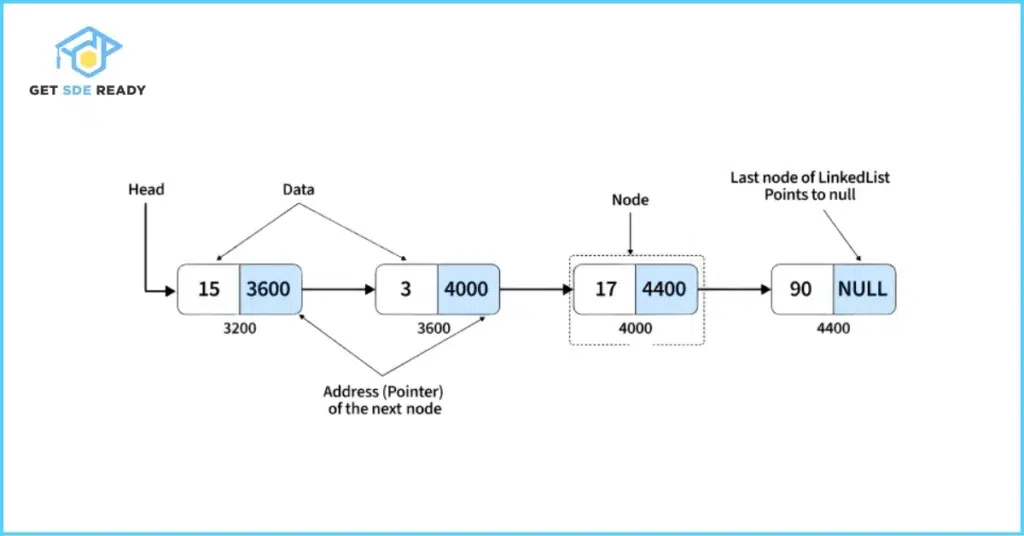
Merge Two Sorted Lists: Merge. Approach: Dummy node, compare. Code:
					def mergeTwoLists(l1, l2):
    dummy = ListNode(0)
    tail = dummy
    while l1 and l2:
        if l1.val < l2.val:
            tail.next = l1
            l1 = l1.next
        else:
            tail.next = l2
            l2 = l2.next
        tail = tail.next
    tail.next = l1 or l2
    return dummy.next
Complexity: Time O(n+m), Space O(1). Tip: K-lists extension.
Linked List Cycle: Detect cycle. Approach: Floyd’s tortoise-hare. Code:
					def hasCycle(head):
    slow = fast = head
    while fast and fast.next:
        slow = slow.next
        fast = fast.next.next
        if slow == fast:
            return True
    return False
Complexity: Time O(n), Space O(1). Tip: Find cycle start follow-up.
Remove Nth Node From End of List: Remove. Approach: Two pointers, delay one. Code:
					def removeNthFromEnd(head, n):
    dummy = ListNode(0, head)
    first = second = dummy
    for _ in range(n+1):
        first = first.next
    while first:
        first = first.next
        second = second.next
    second.next = second.next.next
    return dummy.next
Complexity: Time O(n), Space O(1). Tip: Handle n=length.
Add Two Numbers: Add linked lists as numbers. Approach: Carry over. Code
					def addTwoNumbers(l1, l2):
    dummy = ListNode(0)
    tail = dummy
    carry = 0
    while l1 or l2 or carry:
        val1 = l1.val if l1 else 0
        val2 = l2.val if l2 else 0
        total = val1 + val2 + carry
        carry = total // 10
        tail.next = ListNode(total % 10)
        tail = tail.next
        l1 = l1.next if l1 else None
        l2 = l2.next if l2 else None
    return dummy.next
Complexity: Time O(max(n,m)), Space O(max(n,m)). Tip: Reverse input variant.
Advanced Data Structures
LRU Cache: Design with get/put. Approach: Dict + doubly linked list. Code: (Simplified
					class LRUCache:
    def __init__(self, capacity):
        self.capacity = capacity
        self.cache = {}
        self.head = ListNode(0, 0)
        self.tail = ListNode(0, 0)
        self.head.next = self.tail
        self.tail.prev = self.head
    # Add more methods for get, put, remove, add
Complexity: Time O(1) per op, Space O(capacity). Tip: Amazon staple; explain eviction.
Maximum Depth of Binary Tree: Find max depth. Approach: Recursion. Code:
					def maxDepth(root):
    if not root: return 0
    return 1 + max(maxDepth(root.left), maxDepth(root.right))
Complexity: Time O(n), Space O(n). Tip: BFS alternative.
Same Tree: Check identical. Approach: Recurse structure/value. Code:
					def isSameTree(p, q):
    if not p and not q: return True
    if not p or not q or p.val != q.val: return False
    return isSameTree(p.left, q.left) and isSameTree(p.right, q.right)
Complexity: Time O(n), Space O(n). Tip: Subtree variant.
Invert Binary Tree: Flip. Approach: Recurse swap children. Code:
python
					def invertTree(root):
    if root:
        root.left, root.right = invertTree(root.right), invertTree(root.left)
    return root
Complexity: Time O(h), Space O(1). Tip: Binary tree version harder.
Serialize and Deserialize Binary Tree: Codec. Approach: Preorder traversal string. Code: (Omitted for brevity; use queue for deserialize). Complexity: Time O(n), Space O(n). Tip: Handle nulls.

Diameter of Binary Tree: Longest path. Approach: Recurse depth, track max. Code:
					def diameterOfBinaryTree(root):
    def depth(node):
        nonlocal diameter
        if not node: return 0
        left = depth(node.left)
        right = depth(node.right)
        diameter = max(diameter, left + right)
        return 1 + max(left, right)
    diameter = 0
    depth(root)
    return diameter
Complexity: Time O(n), Space O(n). Tip: Edge cases.
Graph Questions
Number of Islands: Count ‘1’ groups in grid. Approach: DFS/BFS flood fill. Code: (DFS)
					def numIslands(grid):
    if not grid: return 0
    rows, cols = len(grid), len(grid[0])
    visit = set()
    islands = 0
    def dfs(r, c):
        if (r < 0 or c < 0 or r == rows or c == cols or
            grid[r][c] == '0' or (r, c) in visit):
            return
        visit.add((r, c))
        dfs(r+1, c)
        dfs(r-1, c)
        dfs(r, c+1)
        dfs(r, c-1)
    for r in range(rows):
        for c in range(cols):
            if grid[r][c] == '1' and (r, c) not in visit:
                dfs(r, c)
                islands += 1
    return islands
Complexity: Time O(m n), Space O(m n). Tip: Union-find alternative.
Clone Graph: Deep copy. Approach: DFS with visited map. Code:
					def cloneGraph(node):
    if not node: return None
    visited = {}
    def dfs(n):
        if n in visited: return visited[n]
        copy = Node(n.val)
        visited[n] = copy
        copy.neighbors = [dfs(nei) for nei in n.neighbors]
        return copy
    return dfs(node)
Complexity: Time O(n+e), Space O(n). Tip: BFS queue.
Course Schedule: Detect cycle in prerequisites. Approach: Topological sort Kahn’s. Code:
					from collections import deque, defaultdict
def canFinish(numCourses, prerequisites):
    graph = defaultdict(list)
    indegree = [0] * numCourses
    for a, b in prerequisites:
        graph[b].append(a)
        indegree[a] += 1
    q = deque([i for i in range(numCourses) if indegree[i] == 0])
    count = 0
    while q:
        node = q.popleft()
        count += 1
        for nei in graph[node]:
            indegree[nei] -= 1
            if indegree[nei] == 0:
                q.append(nei)
    return count == numCourses
Complexity: Time O(n+e), Space O(n+e). Tip: DFS cycle detect.
Pacific Atlantic Water Flow: Cells reaching both oceans. Approach: DFS from edges. Code: (Omitted; two sets for oceans). Complexity: Time O(m n), Space O(m n). Tip: Multi-source BFS.
Word Ladder: Shortest transformation sequence. Approach: BFS with wildcards. Code:
					from collections import deque
def ladderLength(beginWord, endWord, wordList):
    wordSet = set(wordList)
    if endWord not in wordSet: return 0
    q = deque([(beginWord, 1)])
    while q:
        word, steps = q.popleft()
        if word == endWord: return steps
        for i in range(len(word)):
            for c in 'abcdefghijklmnopqrstuvwxyz':
                newWord = word[:i] + c + word[i+1:]
                if newWord in wordSet:
                    wordSet.remove(newWord)
                    q.append((newWord, steps + 1))
    return 0
Complexity: Time O(m^2 n), Space O(m n). Tip: Bidirectional BFS.
Set Matrix Zeroes: Zero rows/cols with zero. Approach: Use first row/col as flags. Code:
					def setZeroes(matrix):
    rows, cols = len(matrix), len(matrix[0])
    col0 = False
    for r in range(rows):
        if matrix[r][0] == 0: col0 = True
        for c in range(1, cols):
            if matrix[r][c] == 0:
                matrix[r][0] = matrix[0][c] = 0
    for r in range(1, rows):
        for c in range(1, cols):
            if matrix[r][0] == 0 or matrix[0][c] == 0:
                matrix[r][c] = 0
    if matrix[0][0] == 0:
        for c in range(cols): matrix[0][c] = 0
    if col0:
        for r in range(rows): matrix[r][0] = 0
Complexity: Time O(m n), Space O(1). Tip: Common in matrix problems.
Tips for Acing Your DSA Interview
Beyond practice, remember: Communicate your thinking. If stuck, ask clarifying questions. Optimize step-by-step. Post-interview, reflect on weak areas—maybe brush up via our DSA course.
Common pitfalls: Ignoring edge cases (empty inputs, max sizes). Stats show 60% of rejections stem from this.
Conclusion
You’ve just tackled a solid DSA mock test—how’d you do? These questions, straight from real interviews, should give you an edge. Keep practicing, and you’ll be ready for anything. Ready to level up? Explore our master course for integrated learning. Drop a comment on your toughest question, and good luck landing that dream job!

DSA, High & Low Level System Designs
- 85+ Live Classes & Recordings
- 24*7 Live Doubt Support
- 400+ DSA Practice Questions
- Comprehensive Notes
- HackerRank Tests & Quizzes
- Topic-wise Quizzes
- Case Studies
- Access to Global Peer Community
Buy for 52% OFF
₹25,000.00 ₹11,999.00
Accelerate your Path to a Product based Career
Boost your career or get hired at top product-based companies by joining our expertly crafted courses. Gain practical skills and real-world knowledge to help you succeed.

DSA, Advanced High & Low Level System Designs
- 85+ Live Classes & Recordings
- 24*7 Live Doubt Support
- 400+ DSA Practice Questions
- Comprehensive Notes
- HackerRank Tests & Quizzes
- Topic-wise Quizzes
- Case Studies
- Access to Global Peer Community
Buy for 40% OFF
₹30,000.00 ₹18,000.00

Advanced Low & High Level System Design
- 20+ Live Classes & Recordings
- 24*7 Live Doubt Support
- Case Studies
- Comprehensive Notes
- HackerRank Tests
- Topic-wise Quizzes
- Access to Global Peer Community
- Interview Prep Material
Buy for 40% OFF
₹19,999.00 ₹11,999.00

SDE 360: Master DSA, System Design, AI & Behavioural
- 100+ Live Classes & Recordings
- 24*7 Live Doubt Support
- 400+ DSA Practice Questions
- Comprehensive Notes
- HackerRank Tests & Quizzes
- Topic-wise Quizzes
- Case Studies
- Access to Global Peer Community
Buy for 50% OFF
₹39,999.00 ₹19,999.00

Mastering GenAI / LLM Engineering
- 100+ Live Classes & Recordings
- 24*7 Live Doubt Support
- 400+ Practice Questions
- Comprehensive Notes
- HackerRank Tests & Quizzes
- Topic-wise Quizzes
- Case Studies
- Access to Global Peer Community
Buy for 50% OFF
₹39,999.00 ₹9,999.00

Essentials of Machine Learning and Artificial Intelligence
- 65+ Live Classes & Recordings
- 24*7 Live Doubt Support
- 22+ Hands-on Live Projects & Deployments
- Comprehensive Notes
- Topic-wise Quizzes
- Case Studies
- Access to Global Peer Community
- Interview Prep Material
Buy for 65% OFF
₹20,000.00 ₹6,999.00

Low & High Level System Design
- 20+ Live Classes & Recordings
- 24*7 Live Doubt Support
- Case Studies
- Comprehensive Notes
- HackerRank Tests
- Topic-wise Quizzes
- Access to Global Peer Community
- Interview Prep Material
Buy for 60% OFF
₹20,000.00 ₹8,999.00
Reach Out Now
If you have any queries, please fill out this form. We will surely reach out to you.
Contact Email
Reach us at the following email address.
arun@getsdeready.com
Phone Number
You can reach us by phone as well.
+91-97737 28034
Our Location
Rohini, Sector-3, Delhi-110085