Introduction to High-Level System Design
System Design Fundamentals
- Functional vs. Non-Functional Requirements
- Scalability, Availability, and Reliability
- Latency and Throughput Considerations
- Load Balancing Strategies
Architectural Patterns
- Monolithic vs. Microservices Architecture
- Layered Architecture
- Event-Driven Architecture
- Serverless Architecture
- Model-View-Controller (MVC) Pattern
- CQRS (Command Query Responsibility Segregation)
Scaling Strategies
- Vertical Scaling vs. Horizontal Scaling
- Sharding and Partitioning
- Data Replication and Consistency Models
- Load Balancing Strategies
- CDN and Edge Computing
Database Design in HLD
- SQL vs. NoSQL Databases
- CAP Theorem and its Impact on System Design
- Database Indexing and Query Optimization
- Database Sharding and Partitioning
- Replication Strategies
API Design and Communication
Caching Strategies
- Types of Caching
- Cache Invalidation Strategies
- Redis vs. Memcached
- Cache-Aside, Write-Through, and Write-Behind Strategies
Message Queues and Event-Driven Systems
- Kafka vs. RabbitMQ vs. SQS
- Pub-Sub vs. Point-to-Point Messaging
- Handling Asynchronous Workloads
- Eventual Consistency in Distributed Systems
Security in System Design
Observability and Monitoring
- Logging Strategies (ELK Stack, Prometheus, Grafana)
- API Security Best Practices
- Secure Data Storage and Access Control
- DDoS Protection and Rate Limiting
Real-World System Design Case Studies
- Distributed locking (Locking and its Types)
- Memory leaks and Out of memory issues
- HLD of YouTube
- HLD of WhatsApp
System Design Interview Questions
- Adobe System Design Interview Questions
- Top Atlassian System Design Interview Questions
- Top Amazon System Design Interview Questions
- Top Microsoft System Design Interview Questions
- Top Meta (Facebook) System Design Interview Questions
- Top Netflix System Design Interview Questions
- Top Uber System Design Interview Questions
- Top Google System Design Interview Questions
- Top Apple System Design Interview Questions
- Top Airbnb System Design Interview Questions
- Top 10 System Design Interview Questions
- Mobile App System Design Interview Questions
- Top 20 Stripe System Design Interview Questions
- Top Shopify System Design Interview Questions
- Top 20 System Design Interview Questions
- Top Advanced System Design Questions
- Most-Frequented System Design Questions in Big Tech Interviews
- What Interviewers Look for in System Design Questions
- Critical System Design Questions to Crack Any Tech Interview
- Top 20 API Design Questions for System Design Interviews
- Top 10 Steps to Create a System Design Portfolio for Developers
Data Structures and Algorithms
- Introduction to Data Structures and Algorithms
- Time and Space Complexity Analysis
- Big-O, Big-Theta, and Big-Omega Notations
- Recursion and Backtracking
- Divide and Conquer Algorithm
- Dynamic Programming: Memoization vs. Tabulation
- Greedy Algorithms and Their Use Cases
- Understanding Arrays: Types and Operations
- Linear Search vs. Binary Search
- Sorting Algorithms: Bubble, Insertion, Selection, and Merge Sort
- QuickSort: Explanation and Implementation
- Heap Sort and Its Applications
- Counting Sort, Radix Sort, and Bucket Sort
- Hashing Techniques: Hash Tables and Collisions
- Open Addressing vs. Separate Chaining in Hashing
- DSA Questions for Beginners
- Advanced DSA Questions for Competitive Programming
- Top 10 DSA Questions to Crack Your Next Coding Test
- Top 50 DSA Questions Every Programmer Should Practice
- Top Atlassian DSA Interview Questions
- Top Amazon DSA Interview Questions
- Top Microsoft DSA Interview Questions
- Top Meta (Facebook) DSA Interview Questions
- Netflix DSA Interview Questions and Preparation Guide
- Top 20 DSA Interview Questions You Need to Know
- Top Uber DSA Interview Questions and Solutions
- Google DSA Interview Questions and How to Prepare
- Airbnb DSA Interview Questions and How to Solve Them
- Mobile App DSA Interview Questions and Solutions
DSA Interview Questions
- DSA Questions for Beginners
- Advanced DSA Questions for Competitive Programming
- Top 10 DSA Questions to Crack Your Next Coding Test
- Top 50 DSA Questions Every Programmer Should Practice
- Top Atlassian DSA Interview Questions
- Top Amazon DSA Interview Questions
- Top Microsoft DSA Interview Questions
- Top Meta (Facebook) DSA Interview Questions
- Netflix DSA Interview Questions and Preparation Guide
- Top 20 DSA Interview Questions You Need to Know
- Top Uber DSA Interview Questions and Solutions
- Google DSA Interview Questions and How to Prepare
- Airbnb DSA Interview Questions and How to Solve Them
- Mobile App DSA Interview Questions and Solutions
Netflix Interview Questions: Mastering Coding and System Design for 2025
If you’re gearing up for a Netflix interview and want to stay on top of the latest prep strategies, sign up for our free courses and get exclusive updates to supercharge your journey.
Preparing for a Netflix interview can feel like binge-watching a thriller series—exciting, intense, and full of twists. As one of the top tech giants, Netflix emphasizes innovation, scalability, and a unique culture that values freedom and responsibility. In this comprehensive guide, we’ll dive deep into the coding and system design questions commonly asked in Netflix interviews. Drawing from real candidate experiences shared on platforms like Glassdoor, LeetCode, and InterviewKickstart, we’ll cover at least 30 high-quality questions that have actually appeared in interviews. I’ll break them down with in-depth explanations, solutions, and actionable advice to help you stand out. Whether you’re a senior engineer or aiming for your first role, this post will equip you with the knowledge to tackle these challenges confidently.
Understanding the Netflix Interview Process
Netflix’s interview process is rigorous but transparent, designed to assess not just technical skills but also cultural fit. According to reports from candidates in 2024 and early 2025, it typically spans 4-6 weeks and includes multiple stages. Let’s break it down.
Overview of the Stages
- Recruiter Screen: A 30-minute call to discuss your background, motivations, and salary expectations. Be ready to explain why Netflix excites you—mention their chaos engineering or global scale for bonus points.
- Hiring Manager Call: Another 30 minutes focused on high-level experiences. This is bidirectional; ask about team projects to show genuine interest.
- Technical Phone Screen: 45-60 minutes of coding, often on a shared editor. Expect medium-to-hard problems with a twist toward real-world applications.
- Onsite (Virtual or In-Person): 4-8 interviews split across coding (1-2), system design (2-3), behavioral (2-3), and a “dream team” chat with directors. System design dominates, reflecting Netflix’s focus on scalable systems.
- Post-Interview: References and offer discussions. Netflix is known for competitive compensation, often exceeding $400K for seniors.
Statistics from Levels.fyi show a 15-20% acceptance rate for software roles, with system design being the make-or-break factor. Pro tip: Read Netflix’s culture memo—it’s often referenced in behavioral rounds.
What to Expect in Coding Rounds
Coding questions at Netflix aren’t just LeetCode grinds; they often evolve into mini system designs. You’ll code in your preferred language (Java, Python, etc.), and interviewers may ask how your solution scales in production. Aim for clean, efficient code with edge cases covered. Recent trends show a mix of data structures and algorithms, with emphasis on optimization.
System Design Focus at Netflix
Netflix loves system design because their infrastructure handles petabytes of data and billions of streams daily. Questions test your ability to build fault-tolerant, scalable systems. Expect follow-ups like “How would you handle a DDoS attack?” or “Scale for 2x users.” Use the STAR method (Situation, Task, Action, Result) to structure responses.
Top Coding Interview Questions at Netflix
Based on 2024-2025 candidate reports, here are 21 high-quality coding questions actually asked in Netflix interviews. I’ve selected these from aggregated experiences on LeetCode Discuss, GeeksforGeeks, and InterviewKickstart. Each includes an in-depth explanation, sample code in Python (common at Netflix), time/space complexity, and tips. Practice these on a timer—Netflix rounds are fast-paced.
Reverse a Singly Linked List Iteratively and Recursively (Without Extra Space) This tests linked list manipulation, a staple for handling sequential data like playlists. Iterative approach uses three pointers; recursive flips the list via stack calls. Solution (Iterative):
					class ListNode:
    def __init__(self, val=0, next=None):
        self.val = val
        self.next = next

def reverseList(head):
    prev, curr = None, head
    while curr:
        next_temp = curr.next
        curr.next = prev
        prev = curr
        curr = next_temp
 return prev
Time: O(n), Space: O(1). Tip: Discuss tail recursion optimization for the recursive version to avoid stack overflow in large lists.
Longest Palindromic Substring Asked in a 2024 phone screen; expand around centers for odd/even lengths. Solution: Dynamic programming or expand-around-center.
					def longestPalindrome(s):
    if not s: return ""
    start, end = 0, 0
    for i in range(len(s)):
        len1 = expandAroundCenter(s, i, i)
        len2 = expandAroundCenter(s, i, i+1)
        max_len = max(len1, len2)
        if max_len > end - start:
            start = i - (max_len - 1) // 2
            end = i + max_len // 2
    return s[start:end+1]

def expandAroundCenter(s, left, right):
    while left >= 0 and right < len(s) and s[left] == s[right]:
        left -= 1
        right += 1
return right - left - 1
Time: O(n^2), Space: O(1). Netflix twist: How would this scale for subtitle strings?
Unique Pairs Summing to Target Common for recommendation matching. Use hashmap for O(n) time. Solution:
					def twoSum(nums, target):
    seen = {}
    for i, num in enumerate(nums):
        complement = target - num
        if complement in seen:
            return [seen[complement], i]
        seen[num] = i
Time: O(n), Space: O(n). Handle duplicates by skipping seen pairs.
Merge K Sorted Arrays From a 2025 onsite; use min-heap for efficiency. Solution: Heapq in Python. Time: O(N log K), where N is total elements.
String with Unique Characters (No Extra DS) Bit manipulation or sorting. Time: O(n log n) for sort.
Median of Two Sorted Arrays (O(log n)) Binary search on partitions. Complex but key for data analytics at Netflix.
Fibonacci with Bottom-Up DP Optimize space to O(1) using variables.
Max Product of Two Distinct Elements Sort or track max/min pairs.
Valid Parentheses Stack-based. Extend to multi-type brackets.
Implement LRU Cache Hashmap + doubly linked list. Netflix uses similar for caching thumbnails.
Intersection of Two Linked Lists Two pointers or length difference.
Rotate Matrix 90 Degrees In-Place Transpose then reverse rows.
Maximum Subarray Sum Kadane’s algorithm. O(n) time.
Balance Unbalanced BST Inorder traversal to sorted array, then build balanced.
Number of Islands in Grid DFS/BFS flood fill. Real-world: User cluster analysis.
Find Triplet Summing to Value Sort + two pointers.
Next Greater Element Monotonic stack.
Detect and Remove Loop in Linked List Floyd’s cycle detection.
Lowest Common Ancestor in Binary Tree Recursive path finding.
Heap Sort Implementation Build max-heap, extract max.
Sum of Two Strings (Add ith Elements) From a 2022 CodeSignal but reported in 2024. Concat digit sums without carry. Solution: See LeetCode discuss for code; handle unequal lengths.
These questions cover 70% of reported coding asks. For more practice, explore our DSA course at getsdeready.com/courses/dsa.
Essential System Design Questions for Netflix
System design questions at Netflix probe your ability to architect for scale—think 200M+ users and 99.99% uptime. Here are 15 questions drawn from actual interviews, with in-depth outlines including functional/non-functional requirements, high-level designs, trade-offs, and Netflix-specific insights. Use diagrams in interviews (e.g., boxes for services, arrows for data flow).
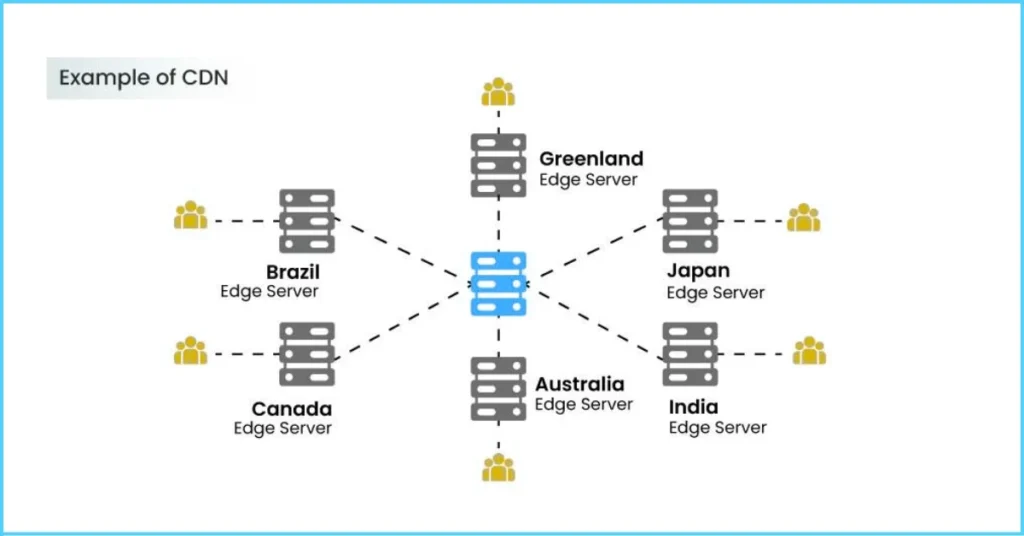
Design a Scalable CDN (Like Open Connect) Functional: Deliver content globally with low latency. Non-functional: Handle PB data, fault-tolerant. Design: Hierarchical caches (origin > regional > edge), DNS routing, LRU eviction. Scale with sharding. Trade-off: Freshness vs. bandwidth (use invalidation). Netflix uses OCAs at ISPs.
- Fault-Tolerant Streaming Service Replicate data across AZs, use Cassandra for DB, Kafka for events. Failover with heartbeats. Tip: Discuss chaos engineering.
- Personalized Recommendation System Batch (Spark) + real-time (Kafka). Algorithms: Collaborative filtering. Scale: Partition by user ID. Cold start: Use demographics.
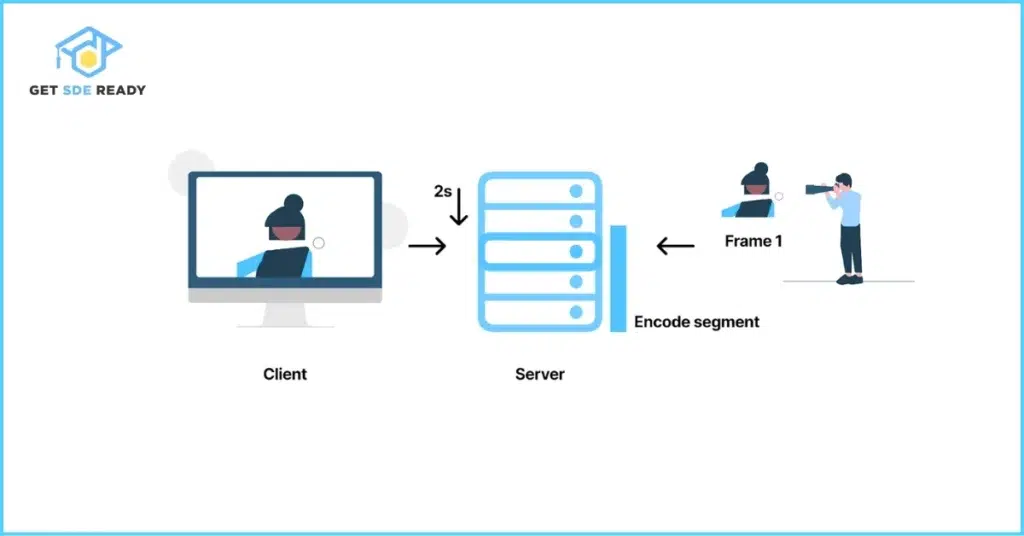
Low-Latency Streaming Adaptive bitrate (HLS/DASH), edge computing. Minimize buffers via predictive prefetching.
- Advanced Search with Autocomplete Trie for prefixes, Elasticsearch for ranking. Personalize with user history.
- Design Netflix Video Streaming Platform Microservices: User, Catalog, Streaming. S3 storage, CDN delivery. Recommendation via ML. Trade-off: Availability over consistency.
- Real-Time Analytics Pipeline Collect events (Fluentd), process (Flink), store (Druid). Alerts via PagerDuty.
- File Sharing Like Dropbox Chunked storage, versioning, sync via WebSockets.
- Web Crawler URL queue (RabbitMQ), politeness delays, distributed with Hadoop.
- API Rate Limiter Token bucket or sliding window. Redis for counters.
- URL Shortener Base62 encoding, DynamoDB for mapping. Handle collisions.
- Video Streaming Concerns (Like Netflix) Bandwidth optimization, DRM security, multi-device sync.
- Design Quora-Like App Feed ranking, sharded DB, caching.
- Proximity Server Geo-hashing, quadtrees for location queries.
- Twitter Blueprint Fanout on write/read, timelines in Redis.
For web dev aspects in designs, check our web development course at getsdeready.com/courses/web-development. Master full stacks with getsdeready.com/courses/master-dsa-web-dev-system-design.
Preparation Tips and Resources
To ace Netflix interviews, practice mock sessions—focus on verbalizing trade-offs. LeetCode premiums for company tags, Grokking System Design for patterns. If data science overlaps, explore getsdeready.com/courses/data-science. For quick refreshers, our crash course at getsdeready.com/crash-course is perfect.
In summary, Netflix seeks engineers who think big. Apply these insights, practice diligently, and you’ll be ready. What’s your next step? Start coding those questions today!
FAQs
DSA, High & Low Level System Designs
- 85+ Live Classes & Recordings
- 24*7 Live Doubt Support
- 400+ DSA Practice Questions
- Comprehensive Notes
- HackerRank Tests & Quizzes
- Topic-wise Quizzes
- Case Studies
- Access to Global Peer Community
Buy for 52% OFF
₹25,000.00 ₹11,999.00
Accelerate your Path to a Product based Career
Boost your career or get hired at top product-based companies by joining our expertly crafted courses. Gain practical skills and real-world knowledge to help you succeed.
Data Analytics
- 20+ Live Classes & Recordings
- 24*7 Live Doubt Support
- 15+ Hands-on Live Projects
- Comprehensive Notes
- Real-world Tools & Technologies
- Access to Global Peer Community
- Interview Prep Material
- Placement Assistance
Buy for 70% OFF
₹9,999.00 ₹2,999.00
SDE 360: Master DSA, System Design, AI & Behavioural
- 100+ Live Classes & Recordings
- 24*7 Live Doubt Support
- 400+ DSA Practice Questions
- Comprehensive Notes
- HackerRank Tests & Quizzes
- Topic-wise Quizzes
- Case Studies
- Access to Global Peer Community
Buy for 50% OFF
₹39,999.00 ₹19,999.00
Fast-Track to Full Spectrum Software Engineering
- 120+ Live Classes & Recordings
- 24*7 Live Doubt Support
- 400+ DSA Practice Questions
- Comprehensive Notes
- HackerRank Tests & Quizzes
- 12+ live Projects & Deployments
- Case Studies
- Access to Global Peer Community
Buy for 51% OFF
₹35,000.00 ₹16,999.00
DSA, High & Low Level System Designs
- 85+ Live Classes & Recordings
- 24*7 Live Doubt Support
- 400+ DSA Practice Questions
- Comprehensive Notes
- HackerRank Tests & Quizzes
- Topic-wise Quizzes
- Case Studies
- Access to Global Peer Community
Buy for 52% OFF
₹25,000.00 ₹11,999.00
Mastering Mern Stack (WEB DEVELOPMENT)
- 65+ Live Classes & Recordings
- 24*7 Live Doubt Support
- 12+ Hands-on Live Projects & Deployments
- Comprehensive Notes & Quizzes
- Real-world Tools & Technologies
- Access to Global Peer Community
- Interview Prep Material
- Placement Assistance
Buy for 53% OFF
₹15,000.00 ₹6,999.00
Mastering Data Structures & Algorithms
- 65+ Live Classes & Recordings
- 24*7 Live Doubt Support
- 400+ DSA Practice Questions
- Comprehensive Notes
- HackerRank Tests
- Access to Global Peer Community
- Topic-wise Quizzes
- Interview Prep Material
Buy for 40% OFF
₹9,999.00 ₹5,999.00
Reach Out Now
If you have any queries, please fill out this form. We will surely reach out to you.
Contact Email
Reach us at the following email address.
arun@getsdeready.com
Phone Number
You can reach us by phone as well.
+91-97737 28034
Our Location
Rohini, Sector-3, Delhi-110085