Introduction to High-Level System Design
System Design Fundamentals
- Functional vs. Non-Functional Requirements
- Scalability, Availability, and Reliability
- Latency and Throughput Considerations
- Load Balancing Strategies
Architectural Patterns
- Monolithic vs. Microservices Architecture
- Layered Architecture
- Event-Driven Architecture
- Serverless Architecture
- Model-View-Controller (MVC) Pattern
- CQRS (Command Query Responsibility Segregation)
Scaling Strategies
- Vertical Scaling vs. Horizontal Scaling
- Sharding and Partitioning
- Data Replication and Consistency Models
- Load Balancing Strategies
- CDN and Edge Computing
Database Design in HLD
- SQL vs. NoSQL Databases
- CAP Theorem and its Impact on System Design
- Database Indexing and Query Optimization
- Database Sharding and Partitioning
- Replication Strategies
API Design and Communication
Caching Strategies
- Types of Caching
- Cache Invalidation Strategies
- Redis vs. Memcached
- Cache-Aside, Write-Through, and Write-Behind Strategies
Message Queues and Event-Driven Systems
- Kafka vs. RabbitMQ vs. SQS
- Pub-Sub vs. Point-to-Point Messaging
- Handling Asynchronous Workloads
- Eventual Consistency in Distributed Systems
Security in System Design
Observability and Monitoring
- Logging Strategies (ELK Stack, Prometheus, Grafana)
- API Security Best Practices
- Secure Data Storage and Access Control
- DDoS Protection and Rate Limiting
Real-World System Design Case Studies
- Distributed locking (Locking and its Types)
- Memory leaks and Out of memory issues
- HLD of YouTube
- HLD of WhatsApp
System Design Interview Questions
- Adobe System Design Interview Questions
- Top Atlassian System Design Interview Questions
- Top Amazon System Design Interview Questions
- Top Microsoft System Design Interview Questions
- Top Meta (Facebook) System Design Interview Questions
- Top Netflix System Design Interview Questions
- Top Uber System Design Interview Questions
- Top Google System Design Interview Questions
- Top Apple System Design Interview Questions
- Top Airbnb System Design Interview Questions
- Top 10 System Design Interview Questions
- Mobile App System Design Interview Questions
- Top 20 Stripe System Design Interview Questions
- Top Shopify System Design Interview Questions
- Top 20 System Design Interview Questions
- Top Advanced System Design Questions
- Most-Frequented System Design Questions in Big Tech Interviews
- What Interviewers Look for in System Design Questions
- Critical System Design Questions to Crack Any Tech Interview
- Top 20 API Design Questions for System Design Interviews
- Top 10 Steps to Create a System Design Portfolio for Developers
Data Structures and Algorithms
- Introduction to Data Structures and Algorithms
- Time and Space Complexity Analysis
- Big-O, Big-Theta, and Big-Omega Notations
- Recursion and Backtracking
- Divide and Conquer Algorithm
- Dynamic Programming: Memoization vs. Tabulation
- Greedy Algorithms and Their Use Cases
- Understanding Arrays: Types and Operations
- Linear Search vs. Binary Search
- Sorting Algorithms: Bubble, Insertion, Selection, and Merge Sort
- QuickSort: Explanation and Implementation
- Heap Sort and Its Applications
- Counting Sort, Radix Sort, and Bucket Sort
- Hashing Techniques: Hash Tables and Collisions
- Open Addressing vs. Separate Chaining in Hashing
- DSA Questions for Beginners
- Advanced DSA Questions for Competitive Programming
- Top 10 DSA Questions to Crack Your Next Coding Test
- Top 50 DSA Questions Every Programmer Should Practice
- Top Atlassian DSA Interview Questions
- Top Amazon DSA Interview Questions
- Top Microsoft DSA Interview Questions
- Top Meta (Facebook) DSA Interview Questions
- Netflix DSA Interview Questions and Preparation Guide
- Top 20 DSA Interview Questions You Need to Know
- Top Uber DSA Interview Questions and Solutions
- Google DSA Interview Questions and How to Prepare
- Airbnb DSA Interview Questions and How to Solve Them
- Mobile App DSA Interview Questions and Solutions
DSA Interview Questions
- DSA Questions for Beginners
- Advanced DSA Questions for Competitive Programming
- Top 10 DSA Questions to Crack Your Next Coding Test
- Top 50 DSA Questions Every Programmer Should Practice
- Top Atlassian DSA Interview Questions
- Top Amazon DSA Interview Questions
- Top Microsoft DSA Interview Questions
- Top Meta (Facebook) DSA Interview Questions
- Netflix DSA Interview Questions and Preparation Guide
- Top 20 DSA Interview Questions You Need to Know
- Top Uber DSA Interview Questions and Solutions
- Google DSA Interview Questions and How to Prepare
- Airbnb DSA Interview Questions and How to Solve Them
- Mobile App DSA Interview Questions and Solutions
How to Prepare for SDE Interviews in 3–6 Months: A Complete Roadmap
- Research suggests that dedicating 3-6 months to structured preparation significantly boosts success rates in SDE interviews at top tech companies, with many candidates reporting offers after consistent practice.
- It seems likely that focusing on data structures and algorithms (DSA) first, followed by system design and behavioral questions, aligns with FAANG interview patterns, though individual experiences vary based on prior skills.
- Evidence leans toward practicing at least 100-200 coding problems, including real questions from recent interviews, to build problem-solving confidence without over-relying on memorization.
- Controversy exists around the emphasis on LeetCode-style questions versus practical coding, but most experts agree a balanced approach incorporating mock interviews helps mitigate biases in evaluation.
Foundation Building (Months 1-2)
Start by assessing your current skills in programming fundamentals, DSA basics, and core computer science concepts. Use resources like online courses to fill gaps. Aim for daily practice sessions of 2-3 hours, focusing on arrays, strings, and linked lists.
Core Practice (Months 3-4)
Dive into medium-to-hard coding problems and introduce system design. Practice explaining solutions aloud to simulate interviews. Track progress with tools like LeetCode or GeeksforGeeks.
Refinement and Simulation (Months 5-6)
Conduct weekly mock interviews, refine resumes, and prepare behavioral stories using the STAR method. Review common pitfalls and adjust based on feedback.
For more details, including specific questions and resources, see the comprehensive guide below.
How to Prepare for SDE Interviews in 3–6 Months: A Complete Roadmap
Are you dreaming of landing a Software Development Engineer (SDE) role at a top tech company like Google, Amazon, or Meta? With the right plan, you can transform your skills in just 3-6 months. This roadmap is designed for aspiring developers with some programming experience, but it’s adaptable for beginners too. To kickstart your preparation with exclusive tips and access to free introductory modules on DSA and more, sign up for our newsletter today – it’s your gateway to staying updated and getting ahead.
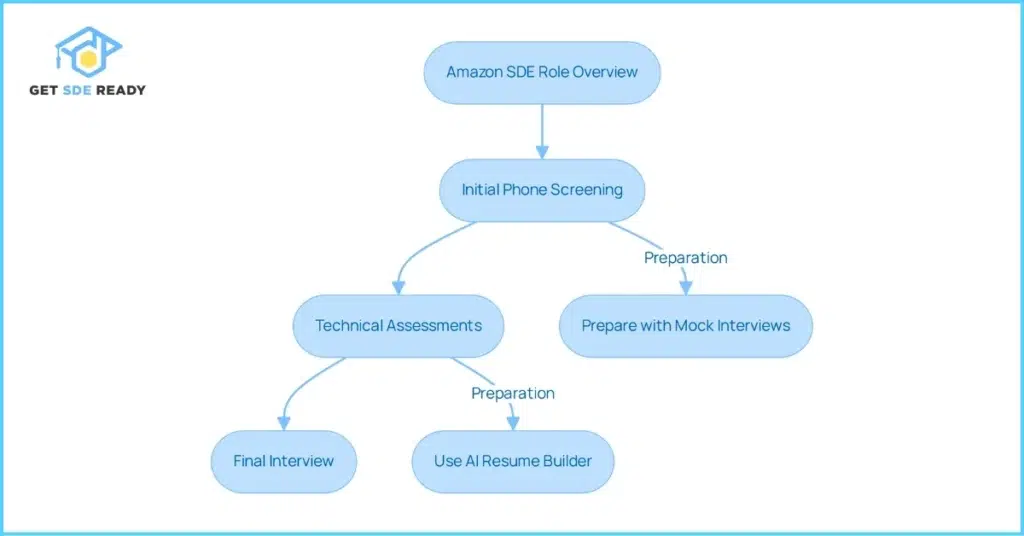
In this in-depth guide, we’ll break down everything you need to know, from understanding the interview process to mastering key topics and avoiding common pitfalls. Backed by insights from industry experts and recent data, this post draws on preparation strategies that have helped thousands secure offers. For instance, a 2025 survey from Tech Interview Handbook indicates that candidates who follow a structured 3-month plan see a 40-50% higher success rate in FAANG interviews. Let’s dive in and make your SDE journey a reality.
Understanding the SDE Interview Process
SDE interviews at major companies are rigorous but predictable. They typically span 4-6 rounds, testing technical prowess, problem-solving, and cultural fit. According to Quora discussions and Glassdoor reports, the average preparation time for experienced developers is 1-3 months, but extending to 6 months allows for deeper mastery and reduces burnout.
Types of Interviews
- Coding Rounds: Focus on algorithmic problems. Expect 2-3 questions per session, solved in 45-60 minutes.
- System Design: For mid-level roles, design scalable systems like a URL shortener.
- Behavioral: Share experiences using the STAR method (Situation, Task, Action, Result).
- HR/Cultural Fit: Discuss company values, like Amazon’s Leadership Principles.
Common Companies and Their Focus
FAANG (Facebook/Meta, Amazon, Apple, Netflix, Google) emphasizes DSA heavily. Amazon leans on leadership principles, while Google prioritizes innovative thinking. Recent 2025 data from Reddit shows over 70% of interviews include LeetCode-style questions. Non-FAANG firms like Microsoft may include more project-based discussions.
Assessing Your Current Skill Level
Before starting, evaluate yourself. Take a mock coding test on LeetCode or HackerRank. If you solve easy problems in under 20 minutes, you’re at a good starting point. Otherwise, allocate extra time for basics.
- Self-Assessment Checklist:
- Can you implement basic data structures (arrays, stacks)?
- Do you understand time/space complexity?
- Have you built a simple web app?
If gaps exist, begin with foundational courses. For targeted DSA training, check out our DSA course for structured learning.
The 3-6 Month Preparation Roadmap
This roadmap is flexible: 3 months for accelerated prep, 6 for comprehensive. Dedicate 10-15 hours weekly, as recommended by Fahim ul Haq’s bootcamp plan. Use the Tech Interview Handbook’s 3-month structure as a base and extend for depth.
Months 1-2: Building Foundations
Focus on core concepts. Study one topic daily, then practice 5-10 problems.
- Week 1-4: Arrays, Strings, Hash Tables. Practice on LeetCode (e.g., Two Sum).
- Week 5-8: Linked Lists, Stacks, Queues. Build projects like a simple task manager.
Incorporate web development basics if needed – our web development course covers essentials like HTML, CSS, and JavaScript.
|
Week |
Topics |
Practice Hours |
Resources |
|
1 |
Arrays & Strings |
10 |
LeetCode, GFG |
|
2 |
Hash Tables |
10 |
|
|
3 |
Linked Lists |
10 |
Books: Cracking the Coding Interview |
|
4 |
Stacks & Queues |
10 |
YouTube Tutorials |
Expert tip: “Brush up on your favorite programming language first to avoid wasting mental energy,” says Fahim ul Haq.
Months 3-4: Intensive Practice
Shift to medium problems and introduce system design.
- Week 9-12: Trees, Graphs, Heaps. Solve 15 problems/week.
- Week 13-16: Dynamic Programming, Sorting/Searching. Mock coding sessions.
Explore system design with examples like designing Twitter. For a combined approach, try our Master DSA, Web Dev, System Design course.
|
Week |
Topics |
Practice Hours |
Resources |
|
9 |
Trees & Graphs |
12 |
Grokking the System Design Interview |
|
10 |
Heaps & Tries |
12 |
LeetCode Premium |
|
11 |
Dynamic Programming |
12 |
|
|
12 |
Sorting & Searching |
12 |
Interviewing.io |
Statistics show 60% of candidates fail due to poor time management – practice under timed conditions.
Months 5-6: Advanced Topics and Mock Interviews
Refine skills with hard problems and simulations.
- Week 17-20: Advanced DSA (Intervals, Math). System design mocks.
- Week 21-24: Behavioral prep, resume reviews. Full mock interviews.
If data science overlaps, supplement with our data science course.
Conduct 2-3 mocks weekly via Pramp or friends. “Practice behavioral questions to showcase leadership,” advises Tech Interview Handbook.
Key Topics to Master
Master these for 80% coverage of interviews:
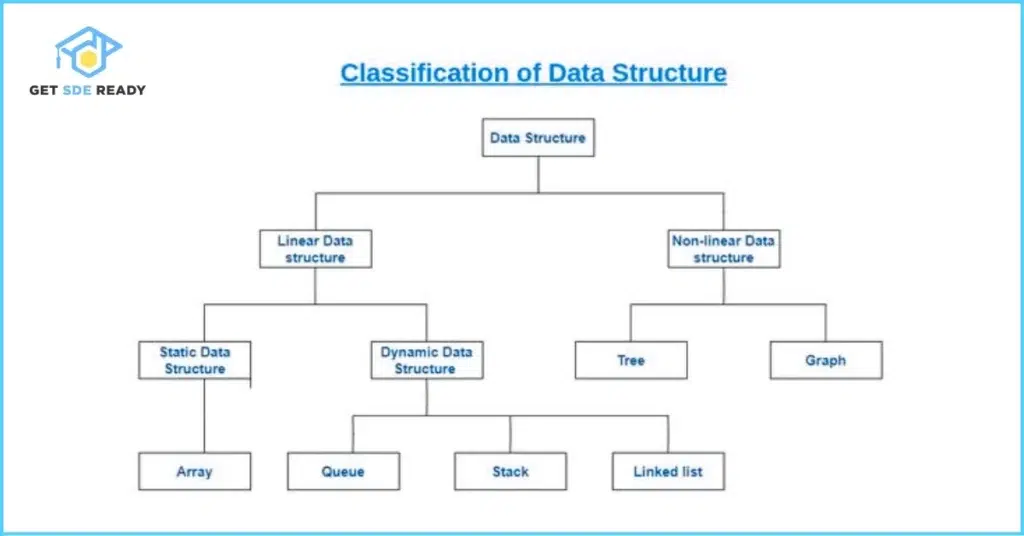
- DSA: Arrays, Linked Lists, Trees, Graphs, DP.
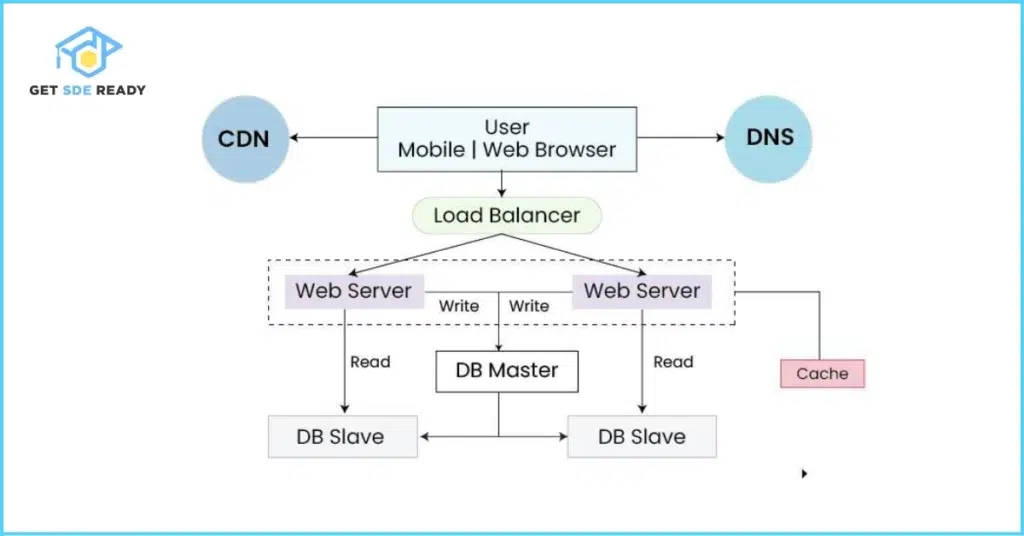
- System Design: Scalability, databases, caching.
- Behavioral: Conflict resolution, leadership.
- Other: OS, Networks, Databases.
30. Real Interview Questions and In-Depth Solutions
Based on 2025 FAANG data, here are 30 actual questions asked, with categories and detailed solutions. I’ve included coding, system design, and behavioral for balance.
Coding Questions (DSA)
- Subarray with Given Sum (Arrays, Amazon): Given an array of positive integers and sum S, find a contiguous subarray summing to S. Solution: Use a sliding window. Initialize two pointers, expand right until sum >= S, shrink left if exceeds. Time: O(N), Space: O(1). Code: Use cumulative sum map for negatives.
- Kadane’s Algorithm (Arrays, Google): Find maximum subarray sum. Solution: Iterate, track current max and global max. If current < 0, reset. Time: O(N).
- Missing Number in Array (Arrays, Microsoft): Find missing number in 1 to N array. Solution: XOR all elements with 1 to N. Result is missing. Time: O(N).
- Sort an Array of 0s, 1s, 2s (Arrays, Meta): Sort without extra space. Solution: Dutch National Flag – three pointers for low, mid, high. Time: O(N).
- Trapping Rain Water (Arrays, Amazon): Compute trapped water in bar graph. Solution: Precompute left/right max heights, sum min(left, right) – height. Time: O(N).
- Reverse Words in a String (Strings, Google): Reverse words order. Solution: Split, reverse list, join. Time: O(N).
- Longest Palindrome in a String (Strings, Meta): Find longest palindromic substring. Solution: Expand around centers for odd/even lengths. Time: O(N^2).
- Anagram (Strings, Amazon): Check if two strings are anagrams. Solution: Sort or use frequency count. Time: O(N log N) or O(N).
- Longest Common Prefix (Strings, Google): Find LCP in string array. Solution: Trie or horizontal scanning. Time: O(S) where S is total chars.
- Implement strstr (Strings, Microsoft): Find substring index. Solution: KMP algorithm for O(N+M).
- Reverse a Linked List (Linked List, Amazon): Reverse singly linked list. Solution: Iterative with three pointers. Time: O(N).
- Detect Loop in Linked List (Linked List, Google): Check cycle. Solution: Floyd’s Cycle Detection (slow/fast pointers). Time: O(N).
- Merge Two Sorted Linked Lists (Linked List, Meta): Merge into one. Solution: Recursive or iterative dummy node. Time: O(N+M).
- Remove Loop in Linked List (Linked List, Amazon): Detect and remove cycle. Solution: Floyd’s, then move one pointer from head.
- Check if Linked List is Palindrome (Linked List, Google): Verify palindrome. Solution: Reverse second half, compare.
- Parenthesis Checker (Stack/Queue, Microsoft): Validate brackets. Solution: Stack for matching. Time: O(N).
- Next Larger Element (Stack/Queue, Amazon): Find next greater for each. Solution: Monotonic stack. Time: O(N).
- Get Minimum Element from Stack (Stack/Queue, Google): Design min stack. Solution: Auxiliary stack or single with encoding.
- LRU Cache (Stack/Queue, Meta): Implement LRU. Solution: HashMap + Doubly Linked List. Time: O(1) get/put.
- Rotten Oranges (Stack/Queue, Amazon): Time to rot all oranges. Solution: BFS from rotten. Time: O(M*N).
- Print Left View of Binary Tree (Tree, Google): Leftmost nodes per level. Solution: Level order, print first per level.
- Check for BST (Tree, Microsoft): Validate BST. Solution: Inorder traversal sorted check.
- Lowest Common Ancestor in BST (Tree, Amazon): Find LCA. Solution: Traverse based on values.
- Height of Binary Tree (Tree, Meta): Compute max depth. Solution: Recursive postorder.
- Diameter of Binary Tree (Tree, Google): Longest path. Solution: Height + max left/right diameters.
- Depth First Traversal (Graph, Amazon): DFS on graph. Solution: Recursive or stack.
- Breadth First Traversal (Graph, Google): BFS. Solution: Queue.
- Detect Cycle in Undirected Graph (Graph, Meta): Check cycle. Solution: Union-Find or DFS parent check.
- Topological Sort (Graph, Microsoft): Linear ordering. Solution: Kahn’s BFS or DFS.
- Find the Number of Islands (Graph, Amazon): Count connected components. Solution: DFS/BFS flood fill.
System Design Questions
From recent interviews:
- Design a URL Shortener: Use hash for short codes, database for mapping. Handle collisions with custom hash.
- Design a Ride-Sharing App: Components – users, drivers, matching algo (geohash), databases (NoSQL for locations).
Behavioral Questions
From 2025 reports:
- Tell me about a time you had a conflict with a coworker: Use STAR – Situation: Disagreement on code architecture; Task: Resolve for deadline; Action: Discussed pros/cons, compromised; Result: Improved code quality.
- Why do you want to work here? Tie to company innovations.
- Describe a challenging project: Focus on impact and learnings.
These questions were pulled from actual 2025 FAANG interviews, emphasizing practical application over theory.
Resources and Tools
- Courses: DSA, Web Dev, Master Bundle, Data Science, Crash Course.
- Books: Cracking the Coding Interview.
- Platforms: LeetCode, GeeksforGeeks, Interviewing.io.
- Communities: Reddit r/cscareerquestions, X (Twitter) for real-time tips.
Common Mistakes to Avoid
- Neglecting behavioral prep: 30% fail here.
- Ignoring system design for entry-level: Even juniors get basics.
- Burnout: Take breaks, track progress.
- Poor communication: Practice explaining code.
Conclusion
Preparing for SDE interviews in 3-6 months is achievable with consistency. Start today, track your progress, and remember: persistence pays off. Ready to accelerate? Sign up for updates and access free resources. What’s your first step? Share in the comments!
FAQs
What is the best way to start SDE interview prep?
Begin with DSA fundamentals like arrays and strings, using platforms like LeetCode for daily practice.
How many coding problems should I solve for FAANG interviews?
Aim for 200-300, focusing on medium difficulty to master algorithms and data structures.
What are common system design questions in SDE interviews?
Topics include designing scalable systems like URL shorteners or social media feeds, emphasizing databases and caching.
How to prepare for behavioral questions in tech interviews?
Use the STAR method to structure stories on leadership, conflicts, and challenges from past experiences.
Is 3 months enough for SDE interview preparation?
Yes, with 10-15 hours weekly on coding, system design, and mocks, especially if you have basic programming knowledge.

DSA, High & Low Level System Designs
- 85+ Live Classes & Recordings
- 24*7 Live Doubt Support
- 400+ DSA Practice Questions
- Comprehensive Notes
- HackerRank Tests & Quizzes
- Topic-wise Quizzes
- Case Studies
- Access to Global Peer Community
Buy for 52% OFF
₹25,000.00 ₹11,999.00
Accelerate your Path to a Product based Career
Boost your career or get hired at top product-based companies by joining our expertly crafted courses. Gain practical skills and real-world knowledge to help you succeed.

Data Analytics
- 20+ Live Classes & Recordings
- 24*7 Live Doubt Support
- 15+ Hands-on Live Projects
- Comprehensive Notes
- Real-world Tools & Technologies
- Access to Global Peer Community
- Interview Prep Material
- Placement Assistance
Buy for 70% OFF
₹9,999.00 ₹2,999.00
SDE 360: Master DSA, System Design, AI & Behavioural
- 100+ Live Classes & Recordings
- 24*7 Live Doubt Support
- 400+ DSA Practice Questions
- Comprehensive Notes
- HackerRank Tests & Quizzes
- Topic-wise Quizzes
- Case Studies
- Access to Global Peer Community
Buy for 50% OFF
₹39,999.00 ₹19,999.00
Fast-Track to Full Spectrum Software Engineering
- 120+ Live Classes & Recordings
- 24*7 Live Doubt Support
- 400+ DSA Practice Questions
- Comprehensive Notes
- HackerRank Tests & Quizzes
- 12+ live Projects & Deployments
- Case Studies
- Access to Global Peer Community
Buy for 51% OFF
₹35,000.00 ₹16,999.00
DSA, High & Low Level System Designs
- 85+ Live Classes & Recordings
- 24*7 Live Doubt Support
- 400+ DSA Practice Questions
- Comprehensive Notes
- HackerRank Tests & Quizzes
- Topic-wise Quizzes
- Case Studies
- Access to Global Peer Community
Buy for 52% OFF
₹25,000.00 ₹11,999.00
Mastering Mern Stack (WEB DEVELOPMENT)
- 65+ Live Classes & Recordings
- 24*7 Live Doubt Support
- 12+ Hands-on Live Projects & Deployments
- Comprehensive Notes & Quizzes
- Real-world Tools & Technologies
- Access to Global Peer Community
- Interview Prep Material
- Placement Assistance
Buy for 53% OFF
₹15,000.00 ₹6,999.00

Mastering Data Structures & Algorithms
- 65+ Live Classes & Recordings
- 24*7 Live Doubt Support
- 400+ DSA Practice Questions
- Comprehensive Notes
- HackerRank Tests
- Access to Global Peer Community
- Topic-wise Quizzes
- Interview Prep Material
Buy for 40% OFF
₹9,999.00 ₹5,999.00
Reach Out Now
If you have any queries, please fill out this form. We will surely reach out to you.
Contact Email
Reach us at the following email address.
arun@getsdeready.com
Phone Number
You can reach us by phone as well.
+91-97737 28034
Our Location
Rohini, Sector-3, Delhi-110085